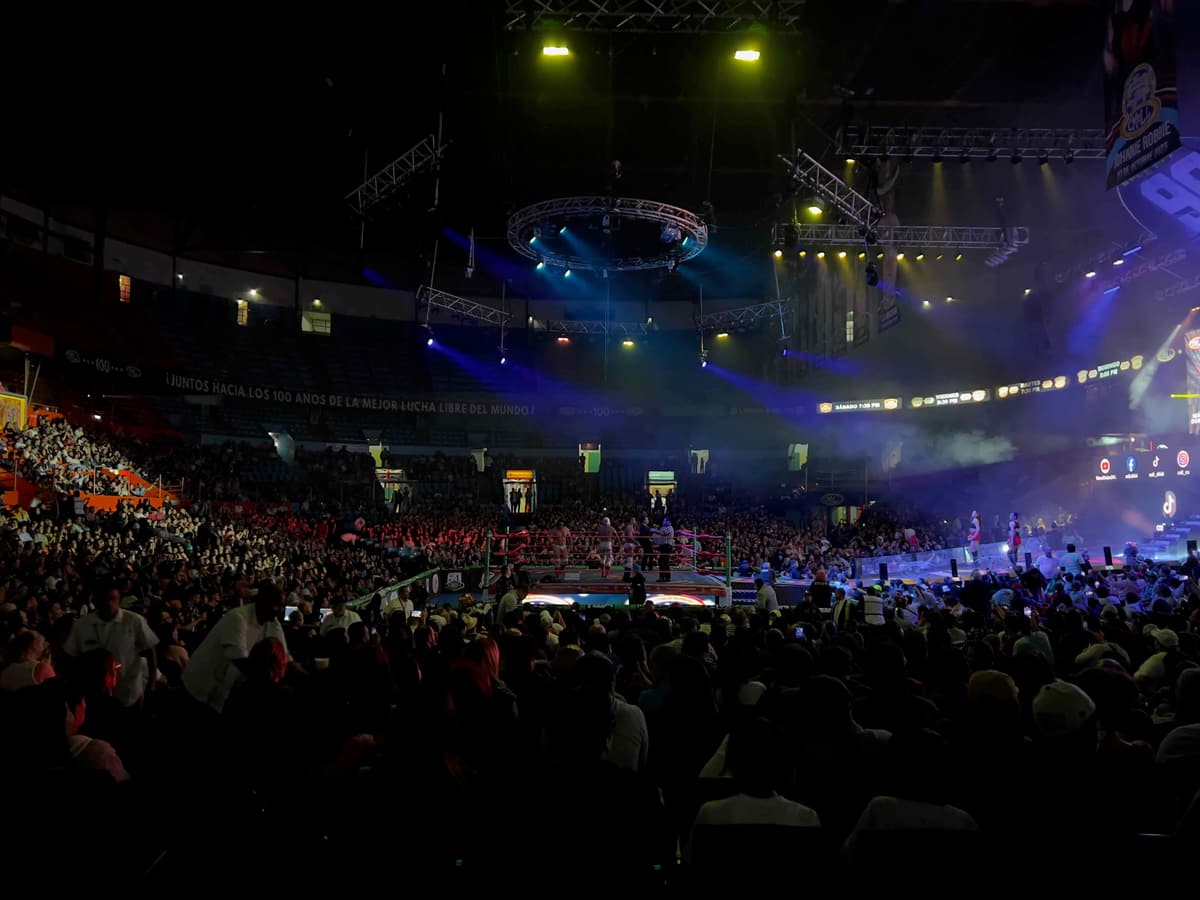
Lucha libre took its modern shape in 1933, when Salvador Lutteroth founded the company now called CMLL in Mexico City. Masks arrived a year later, El Santo turned wrestlers into national heroes in the 1950s and 60s, and Mexican high-flyers like Rey Mysterio and Místico went on to change wrestling in the United States.
Lucha libre in sixteen dates
- 1863
The legend
Mexican wrestling is often said to begin with Enrique Ugartechea adapting Greco-Roman wrestling during the French intervention. It is repeated everywhere and documented almost nowhere.
- 1933
Lutteroth’s gamble
On 21 September Salvador Lutteroth stages the first show of the Empresa Mexicana de Lucha Libre at the run-down Arena Modelo. It is the company we now call CMLL.
- 1934
The first mask
An American, Cyclone Mackey, wrestles as La Maravilla Enmascarada, “The Masked Marvel”, at EMLL’s first anniversary show. Mexico never looks back.
- 1942
Enter El Santo
Rodolfo Guzmán Huerta first wrestles in a silver mask as El Santo, “The Saint”. For the next four decades his face is famous precisely because nobody sees it.
- 1943
Arena Coliseo
Lutteroth opens the first arena in Mexico built specifically for wrestling, in the historic centre. It still runs shows every Thursday and Saturday.
- 1952
Comics and rivals
Santo gets his own comic, which runs for 35 years. On 7 November he unmasks Black Shadow, igniting a rivalry, and later partnership, with Blue Demon.
- 1950s
Banned
Mexico City’s regent Ernesto Uruchurtu takes lucha libre off the city’s television and bars women from wrestling in the capital. Lucha moves to the cinema instead.
- 1956
Arena México
Built with lottery winnings on the old Arena Modelo site, the 16,500-seat “Cathedral of Lucha Libre” opens on 27 April.
- 1958
Lucha goes to the movies
Santo’s first film. He makes 53 by 1982, fighting vampires, mummies and Martians, with Blue Demon and Mil Máscaras starring in their own.
- 1968
The Olympics
Arena México hosts the boxing at the Mexico City Olympic Games.
- 1984
The Saint unmasks
Santo lifts his mask on the TV show Contrapunto in late January. He dies a week later, on 5 February, and is buried in his silver mask.
- 1986
Women return
Mexico City licenses women wrestlers again, after three decades away.
- 1990s
Splits and screens
EMLL becomes CMLL, lucha returns to national TV, and in 1992 booker Antonio Peña walks out with young stars to found AAA. In 1996 WCW’s cruiserweights bring the style to American TV.
- 2004
Místico
Luis Urive becomes Místico and, by 2006, is the biggest draw in Mexico.
- 2018
Heritage
On 21 July Mexico City declares lucha libre part of its intangible cultural heritage.
- 2025
WWE buys in
WWE announces a deal to buy AAA. CMLL, now in its tenth decade, is still family-run and still at Arena México five nights a week.
Origins: from Greco-Roman to Arena Modelo
Wrestling was popular in Mexico long before anyone wore a mask. A story you will read everywhere says it began in 1863, when Enrique Ugartechea adapted Greco-Roman wrestling during the French intervention. It may be true; it is very thinly documented, so treat it as legend.
The history that is documented starts with Salvador Lutteroth, a property inspector in the tax department who had watched professional wrestling across the border in Ciudad Juárez and El Paso, Texas, around 1929, and saw no reason Mexico City could not have its own. He founded the Empresa Mexicana de Lucha Libre (EMLL) and ran its first show on 21 September 1933 at Arena Modelo, a dilapidated building he rented after a better venue turned him down. Mexican wrestling still calls him its father, and his family still runs the company.
The mask arrives
Exactly a year later, on 21 September 1934, Lutteroth sent an American wrestler, Cyclone Mackey, out in a mask as La Maravilla Enmascarada. It is generally recognised as the first masked wrestler in Mexico, and within a decade masks had become the heart of the sport.
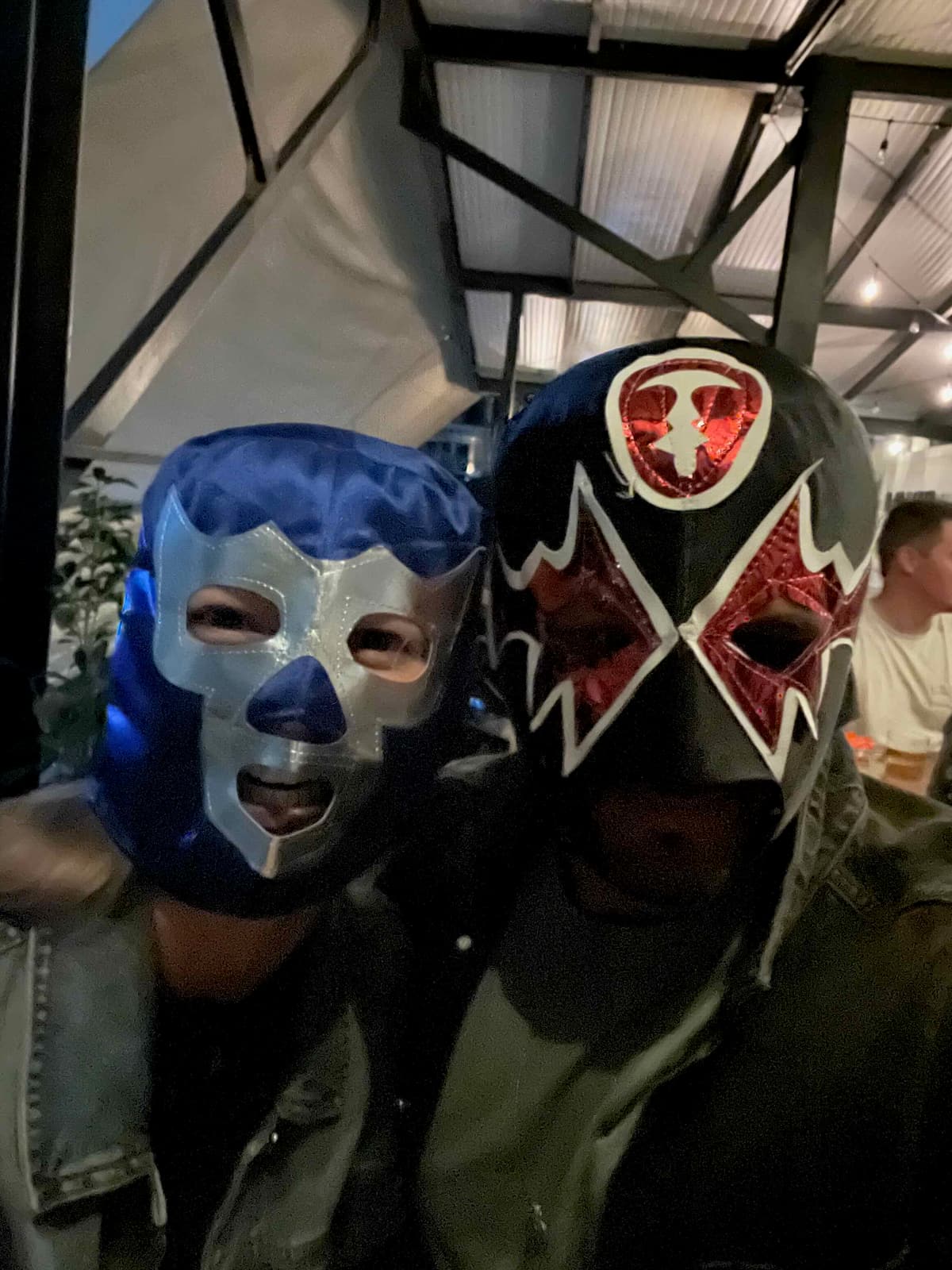
A mask is not a costume. It is the wrestler's identity, often for their whole career, which is why the biggest matches are luchas de apuestas, bet matches, where the loser unmasks in the ring. Every September CMLL's anniversary show, held every year since 1934 and the longest-running annual show in wrestling, still builds to one when it can.
The arenas
EMLL outgrew Arena Modelo quickly. In 1943 Lutteroth opened Arena Coliseo, the first arena in Mexico built specifically for wrestling. In 1956 he replaced Arena Modelo itself with Arena México, paid for with lottery winnings: 16,500 seats, nicknamed La Catedral de la Lucha Libre, and good enough to host the boxing at the 1968 Olympics. Both are still CMLL's homes today.
Visiting Arena México Visiting Arena Coliseo
The golden age: El Santo, Blue Demon and Mil Máscaras
El Santo, real name Rodolfo Guzmán Huerta, started wrestling in the mid-1930s and first wore the silver mask on 26 July 1942. He became far more than a wrestler: a comic-book hero from 1952 (the series ran for 35 years) and a film star in 53 movies between 1958 and 1982, battling vampires, mummies and aliens without ever taking the mask off.
His great foil was Blue Demon. When Santo beat and unmasked Blue Demon's partner Black Shadow on 7 November 1952, Blue Demon turned técnico and chased Santo for years; they later teamed in the ring and on screen, though the rivalry never quite ended. With the globe-trotting Mil Máscaras, they are remembered as los tres grandes, the big three of lucha cinema.
Banned from TV, and from women
Lucha libre's golden age happened partly in spite of the authorities. In the 1950s Mexico City's regent, Ernesto Uruchurtu, took lucha libre off the capital's television, reportedly after complaints about children copying the moves. It did not return to national television until the early 1990s, which is one reason the films and comics mattered so much.
The same moral panic pushed women out of the capital's rings. Luchadoras were banned from wrestling in Mexico City from the 1950s until 1986, when the city's commission began licensing them again. Women's matches are now a regular part of the card.
CMLL, AAA and the rivals
EMLL joined the American National Wrestling Alliance in 1953 and left it in the late 1980s, taking a new, more international name: Consejo Mundial de Lucha Libre, or CMLL.
In 1992 one of its bookers, Antonio Peña, walked out with a group of young wrestlers and, backed by the broadcaster Televisa, founded AAA. It became CMLL's big rival, known for a faster, flashier, more television-friendly show. In 2025 WWE announced a deal to buy AAA.
From Mexico to the WWF and WWE
Mexico's lighter, faster wrestlers changed American wrestling. Mil Máscaras took his masks around the world in the 1960s and 70s and was inducted into the WWE Hall of Fame in 2012.
In 1996 WCW began bringing luchadores into its cruiserweight division, and one of them, Rey Mysterio, became a star. Born just over the border in Chula Vista, California, and trained by his uncle Rey Misterio Sr., he had debuted in Mexico in 1989, aged 14. He joined WWE in 2002, won the WWE Championship once and the World Heavyweight Championship twice, and was inducted into the WWE Hall of Fame in 2023 while still wrestling.
Eddie Guerrero, son of the luchador Gory Guerrero, made a similar journey through AAA and WCW to the WWF, which became WWE in 2002, and won the WWE Championship in 2004. Since then WWE has regularly signed Mexican stars, and in 2025 it went further and agreed to buy AAA itself.
Místico: the biggest star of the 2000s
If El Santo defined the 20th century, Místico defined the start of the 21st. Born Luis Ignacio Urive Alvirde in Mexico City in 1982, he wrestled under other names from 1998 before CMLL repackaged him in 2004 as Místico, an orphan trained by a wrestling priest, with an angelic mask and a signature submission, La Mística. From 2006 to 2011 he was Mexico's biggest box-office draw and its top técnico, flying around Arena México in front of crowds of more than ten thousand.
In 2011 he signed with WWE as Sin Cara. It was a difficult run, interrupted by injuries, and he left in 2014. Meanwhile CMLL had handed the Místico name to a successor, so he wrestled as Myzteziz in AAA and then, back at CMLL from 2015, as Carístico. He only got the name back in 2021, when his successor left the company.
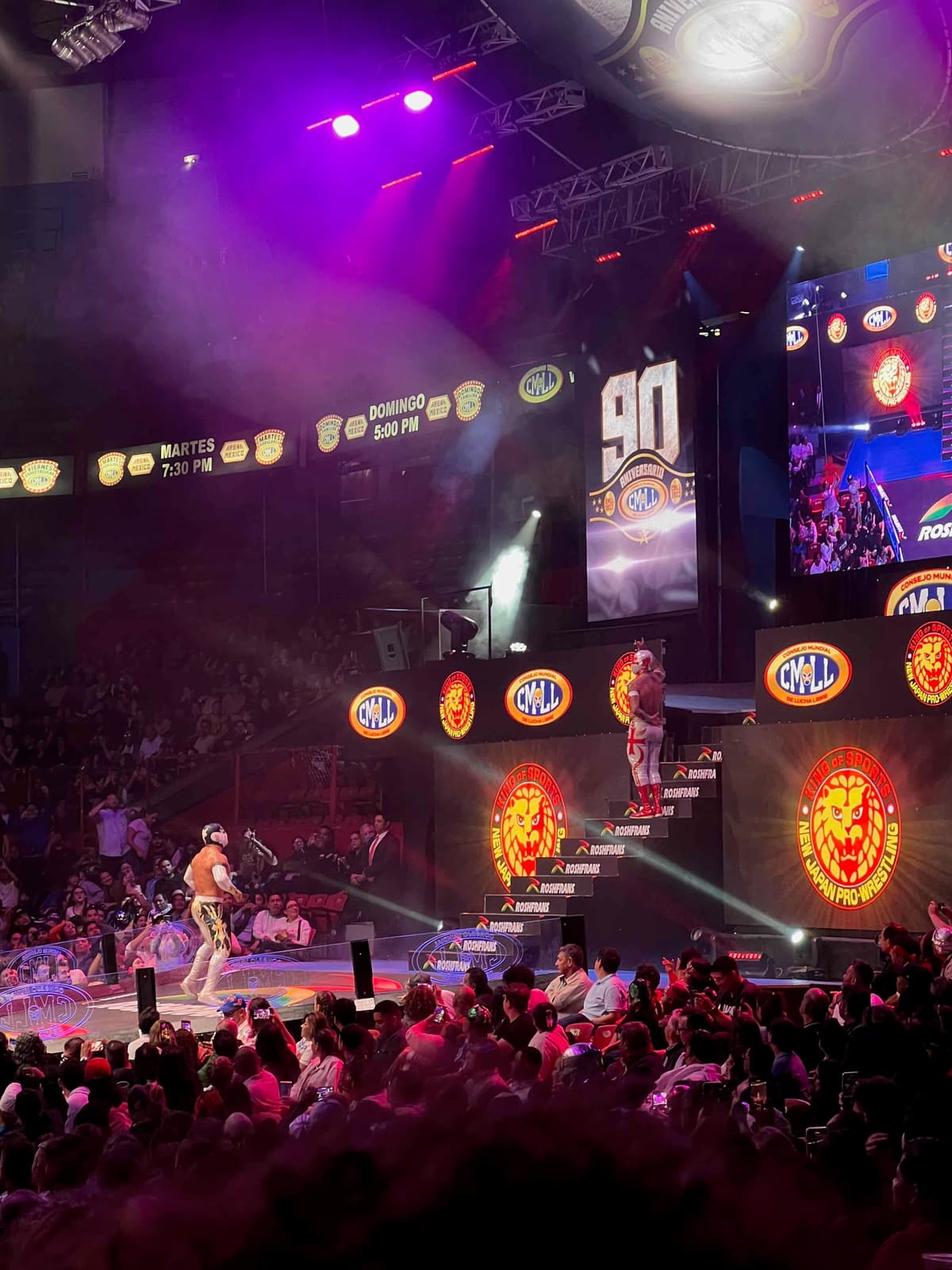
When we went in October 2023, it was Místico, Urive himself, on the big screens and coming down the ramp.
Lucha libre today
Ninety-plus years on, CMLL is still run by the Lutteroth family and still fills Arena México on a Friday. The card still mixes trios, mini-estrellas (the division of smaller wrestlers CMLL formalised around 1990), exóticos (a flamboyant tradition dating back to the 1950s) and the mask matches that started it all. On 21 July 2018 Mexico City declared lucha libre part of its intangible cultural heritage.
The best way to understand all of it is to go. How to get tickets What to expect on the night
Lucha libre history questions
When did lucha libre start?
Its modern history starts on 21 September 1933, when Salvador Lutteroth staged the first show of the Empresa Mexicana de Lucha Libre, now CMLL, in Mexico City. Wrestling was popular in Mexico before then, and some accounts trace it back to the 1860s.
Who is the most famous luchador?
El Santo. Rodolfo Guzmán Huerta wrestled in his silver mask from 1942 to 1982, starred in 53 films and a comic that ran for 35 years, and was buried in the mask in 1984.
Who was the first masked wrestler in Mexico?
An American, Cyclone Mackey, who wrestled as La Maravilla Enmascarada at EMLL’s first anniversary show on 21 September 1934. Masks soon became the heart of lucha libre.
What does lucha libre mean?
Literally “free fighting” or “free wrestling”. It is the Spanish term for professional wrestling, and in Mexico it means the masked, high-flying style.
Was Místico Sin Cara in WWE?
Yes. Luis Urive, the original Místico, wrestled as Sin Cara in WWE from 2011 to 2014. Back in Mexico he became Myzteziz and then Carístico, and he got the Místico name back in 2021.
Is lucha libre part of WWE?
Partly. WWE announced a deal to buy AAA, Mexico’s second-biggest promotion, in 2025. CMLL, which runs Arena México, is still run by the family that founded it. Many WWE stars, from Rey Mysterio to Eddie Guerrero, came up through lucha libre.
What is CMLL?
Consejo Mundial de Lucha Libre, founded in 1933 and the oldest professional wrestling promotion still running. It owns and runs both Arena México and Arena Coliseo.